
Warranty: 3months-1year
Model Number: MY1016Z
Usage: BOAT, Car, Electric Bicycle, Home Appliance
Type: GEAR MOTOR
Torque: 0.80N.m
Construction: Permanent Magnet
Commutation: Brush
Protect Feature: Totally Enclosed
Speed(RPM): 3850r/min
Continuous Current(A): ≤13.4A
Efficiency: IE 2
Product Name: MY1016Z
Rated Power: 250W
Rated Voltage: 24V/36V
Rated Speed: 3850r/min
Rated Current: ≤13.4A
No-load Curernt: ≤2.2A
Efficinecy: ≥78%
Insulation: Class B(130℃)
Using Temperature: -10℃~+40℃(Nonfreezing)
Using Humidity: ≤85%(Place without dew)
Packaging Details: carton
Product Overview 250W 24V 36V 3850RPM High Speed DC Brush MY1016Z Motor for E Bike Conversion Kit Model:MY1016ZRated Power250w250wRated Voltage24vdc35vdcRated Speed3000RPM3000RPMNo Load Speed3850RPM3850RPMRated Current≤13.4A≤9.0ANo Load Current≤2.2A≤2.0ARated Torque0.8N.m0.8N.mEfficiency≥78%≥78%Gear Ratio1:9.78 Product Parameters Model: MY1016Z Types function: Wheelchairs; electric bike; amusement apparatus; agricultural machinery Working principle: The hub is mounted with tongue and groove claws to achieve frictionProduct introduction: Features small volume, low speed, high output torque, low noise, high reliability, easy maintenance, etc. Product Details Applications This kind of MY1016Z motor is widely used in wheelchair, tricycle, balance car,electric bike,boat and other electric equioment. Why Choose Us Package&Shipping Outer packing: Standard export carton with required shipping marksInner packing: Waterproof packing with shock absorbing EPE and cardboard surroundedAs per the clients requirementsShipment: TNT, DHL, UPS, FedEx, By Sea are available. The other shipping ways are also available. Strict product packaging ensures that the motors is not damaged during transportation. Company Profile LUNYEE INDUSTRIES DEVELOPMENT CO, LIMITED was founded in 2007, is a leading manufacturer for factory automation (FA) products! We are dedicated in power transmission and motion control solutions! Our ProductsWe manufacture power transmission products like AC and DC(brush/brushless) gear motor, high precision planetary gearbox (spur/helical gear) for servo motor and stepping motor, linear motion products like linear bushing, linear guide, ball screw, locking nut and coupling and so on! Our ServiceA satisfying one-step service comes from our continuous innovation team and our rigorously-inspected sub-contractors! Our products are widely applied to machine tools, industrial robot, textile machine, packing machine, food machine, medical machine, CNC system and air condition and so on! FAQ Q: Are you trading company or manufacturer?A: We are the motor manufacturer for 15 years in China. Q: How to order?A: send us inquiry → receive our quotation → negotiate details → confirm the sample → sign contract/deposit → mass production → cargo ready → balance/delivery → further cooperation Q: How about Sample order?A: Sample is available for you. please contact us for details. Once we charge you sample fee, please feel easy. It would be refound when you place formal order. Q: Which shipping way is available?A: DHL, FedEx, By Sea are available. The other shipping ways are also available, please contact us if you need ship by the other shipping way. Q: How long is the deliver, producing and shipping?A: Deliver time depends on the quantity you order. usually it takes 15-25 working days. Q: My package has missing products. What can I do?A: Please contact our support team and we will confirm your order with the package contents. We apologize for any inconveniences. Q: How to confirm the payment?A: We accept payment by T/T, PayPal, the other payment ways also could be accepted, Please contact us before you pay by the other payment ways. Also 30 50% deposit is available, the balance money should be paid before shipping.If you have another question, pls feel free to contact us.
What Is a Gear Motor?
A gear motor is an electric motor coupled with a gear train. It uses either DC or AC power to achieve its purpose. The primary benefit of a gear reducer is its ability to multiply torque while maintaining a compact size. The trade-off of this additional torque comes in the form of a reduced output shaft speed and overall efficiency. However, proper gear technology and ratios provide optimum output and speed profiles. This type of motor unlocks the full potential of OEM equipment.
Inertial load
Inertial load on a gear motor is the amount of force a rotating device produces due to its inverse square relationship with its inertia. The greater the inertia, the less torque can be produced by the gear motor. However, if the inertia is too high, it can cause problems with positioning, settling time, and controlling torque and velocity. Gear ratios should be selected for optimal power transfer.
The duration of acceleration and braking time of a gear motor depends on the type of driven load. An inertia load requires longer acceleration time whereas a friction load requires breakaway torque to start the load and maintain it at its desired speed. Too short a time period can cause excessive gear loading and may result in damaged gears. A safe approach is to disconnect the load when power is disconnected to prevent inertia from driving back through the output shaft.
Inertia is a fundamental concept in the design of motors and drive systems. The ratio of mass and inertia of a load to a motor determines how well the motor can control its speed during acceleration or deceleration. The mass moment of inertia, also called rotational inertia, is dependent on the mass, geometry, and center of mass of an object.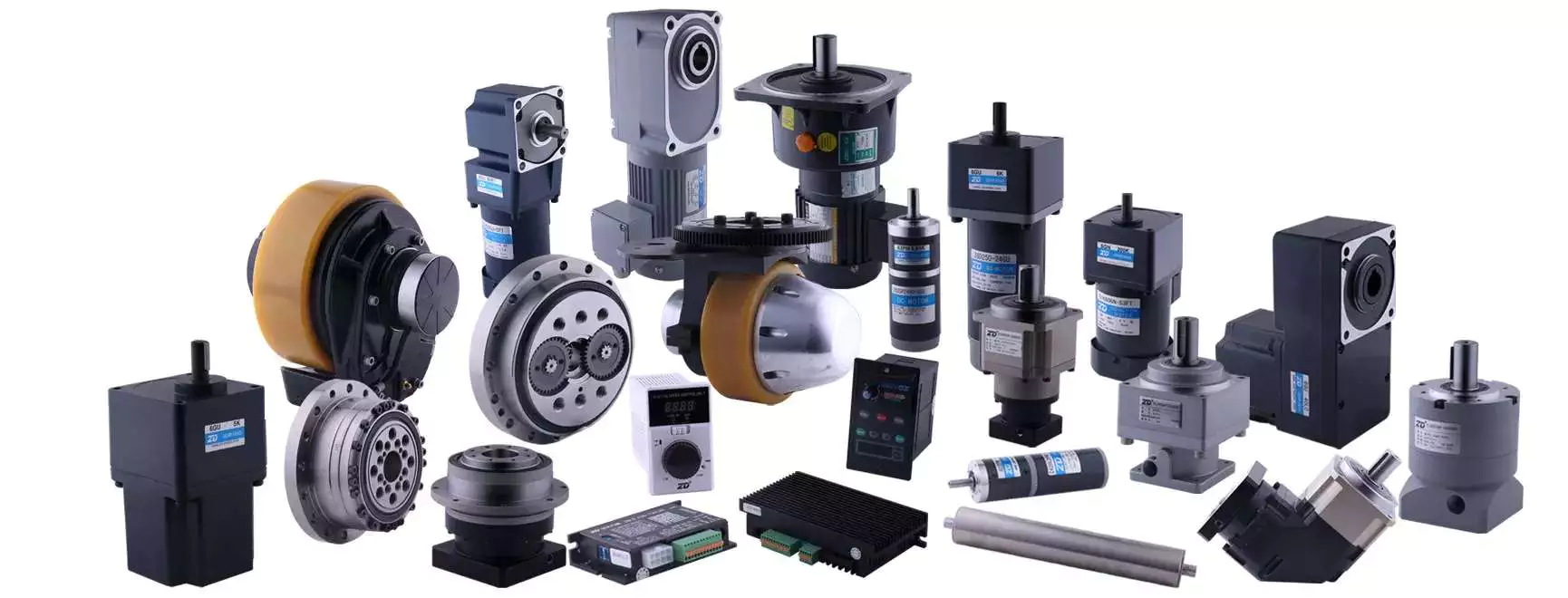
Applications
There are many applications of gear motors. They provide a powerful yet efficient means of speed and torque control. They can be either AC or DC, and the two most common motor types are the three-phase asynchronous and the permanent magnet synchronous servomotor. The type of motor used for a given application will determine its cost, reliability, and complexity. Gear motors are typically used in applications where high torque is required and space or power constraints are significant.
There are two types of gear motors. Depending on the ratio, each gear has an output shaft and an input shaft. Gear motors use hydraulic pressure to produce torque. The pressure builds on one side of the motor until it generates enough torque to power a rotating load. This type of motors is not recommended for applications where load reversals occur, as the holding torque will diminish with age and shaft vibration. However, it can be used for precision applications.
The market landscape shows the competitive environment of the gear motor industry. This report also highlights key items, income and value creation by region and country. The report also examines the competitive landscape by region, including the United States, China, India, the GCC, South Africa, Brazil, and the rest of the world. It is important to note that the report contains segment-specific information, so that readers can easily understand the market potential of the geared motors market.
Size
The safety factor, or SF, of a gear motor is an important consideration when selecting one for a particular application. It compensates for the stresses placed on the gearing and enables it to run at maximum efficiency. Manufacturers provide tables detailing typical applications, with multiplication factors for duty. A gear motor with a SF of three or more is suitable for difficult applications, while a gearmotor with a SF of one or two is suitable for relatively easy applications.
The global gear motor market is highly fragmented, with numerous small players catering to various end-use industries. The report identifies various industry trends and provides comprehensive information on the market. It outlines historical data and offers valuable insights on the industry. The report also employs several methodologies and approaches to analyze the market. In addition to providing historical data, it includes detailed information by market segment. In-depth analysis of market segments is provided to help identify which technologies will be most suitable for which applications.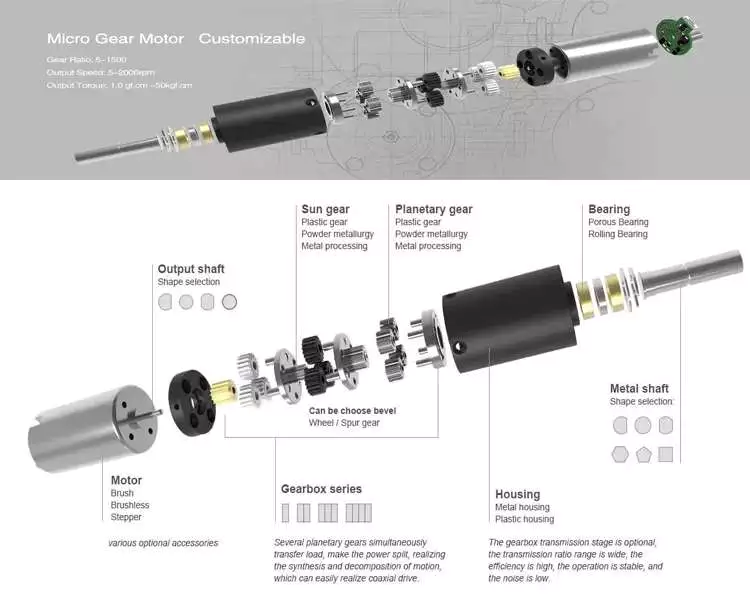
Cost
A gear motor is an electric motor that is paired with a gear train. They are available in AC or DC power systems. Compared to conventional motors, gear reducers can maximize torque while maintaining compact dimensions. But the trade-off is the reduced output shaft speed and overall efficiency. However, when used correctly, a gear motor can produce optimal output and mechanical fit. To understand how a gear motor works, let’s look at two types: right-angle geared motors and inline geared motors. The first two types are usually used in automation equipment and in agricultural and medical applications. The latter type is designed for rugged applications.
In addition to its efficiency, DC gear motors are space-saving and have low energy consumption. They can be used in a number of applications including money counters and printers. Automatic window machines and curtains, glass curtain walls, and banknote vending machines are some of the other major applications of these motors. They can cost up to 10 horsepower, which is a lot for an industrial machine. However, these are not all-out expensive.
Electric gear motors are versatile and widely used. However, they do not work well in applications requiring high shaft speed and torque. Examples of these include conveyor drives, frozen beverage machines, and medical tools. These applications require high shaft speed, so gear motors are not ideal for these applications. However, if noise and other problems are not a concern, a motor-only solution may be the better choice. This way, you can use a single motor for multiple applications.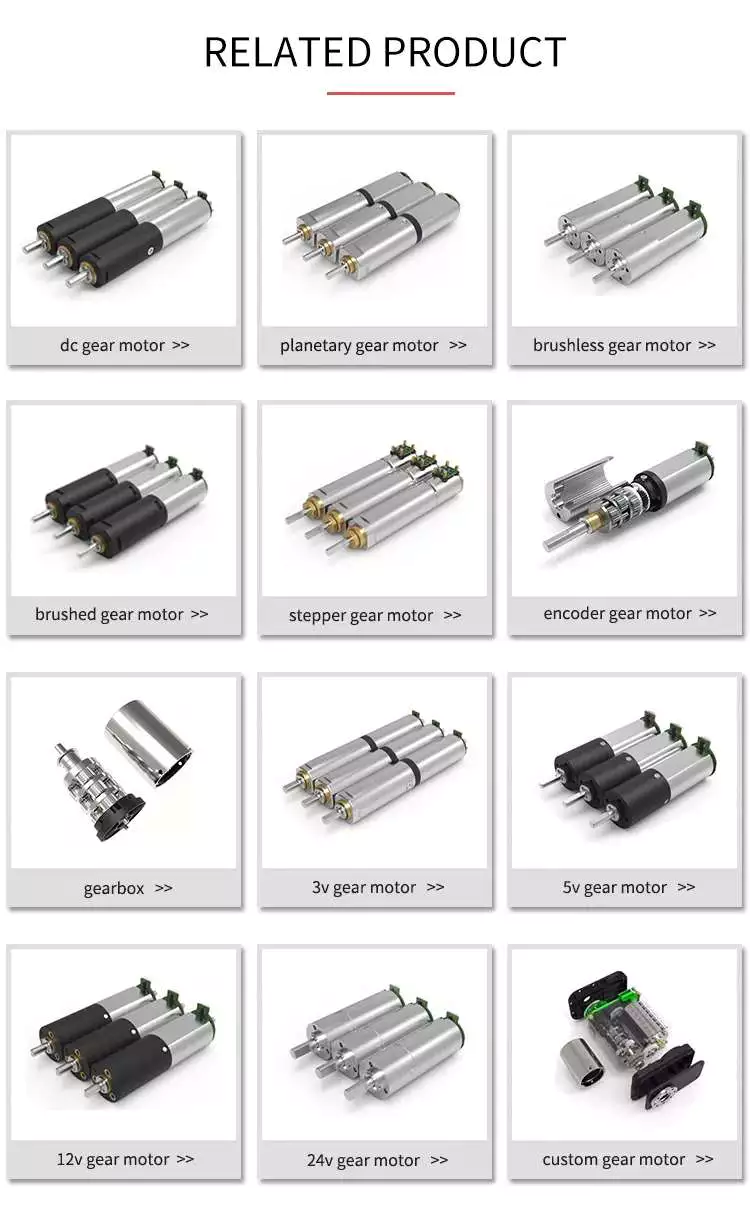
Maintenance
Geared motors are among the most common equipment used for drive trains. Proper maintenance can prevent damage and maximize their efficiency. A guide to gear motor maintenance is available from WEG. To prevent further damage, follow these maintenance steps:
Regularly check electrical connections. Check for loose connections and torque them to the recommended values. Also, check the contacts and relays to make sure they are not tangled or damaged. Check the environment around the gear motor to prevent dust from clogging the passageway of electric current. A proper maintenance plan will help you identify problems and extend their life. The manual will also tell you about any problems with the gearmotor. However, this is not enough – it is important to check the condition of the gearbox and its parts.
Conduct visual inspection. The purpose of visual inspection is to note any irregularities that may indicate possible problems with the gear motor. A dirty motor may be an indication of a rough environment and a lot of problems. You can also perform a smell test. If you can smell a burned odor coming from the windings, there may be an overheating problem. Overheating can cause the windings to burn and damage.
Reactive maintenance is the most common method of motor maintenance. In this type of maintenance, you only perform repairs if the motor stops working due to a malfunction. Regular inspection is necessary to avoid unexpected motor failures. By using a logbook to document motor operations, you can determine when it is time to replace the gear motor. In contrast to preventive maintenance, reactive maintenance requires no regular tests or services. However, it is recommended to perform inspections every six months.

